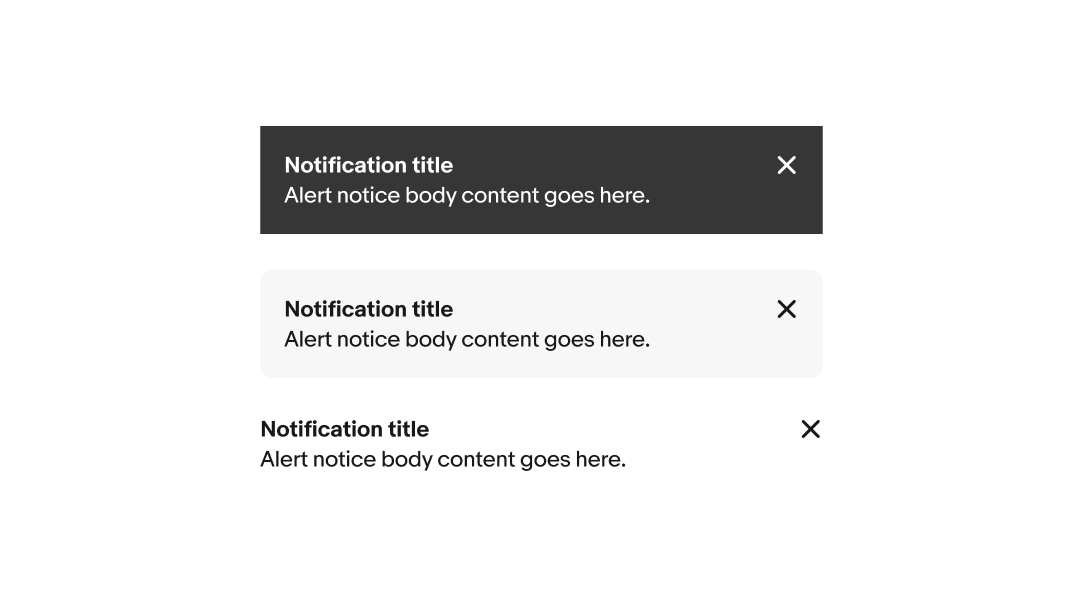
Alert notice overview
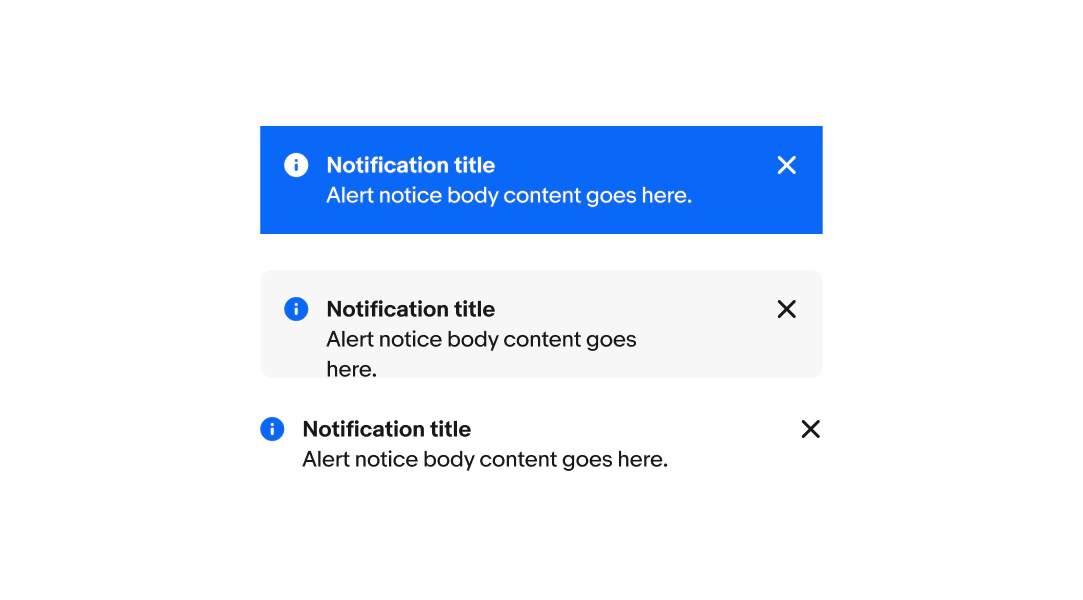
An alert notice is a non-modal message that informs users of system status, action outcomes, or conditions relevant to their current task.

Page notice
A page notice is a prominent message for high-priority conditions that impacts what users can do in the product or on a specific page, like account restrictions, blocking issues, or urgent required actions.

Section notice
A section notice is a message scoped to a specific area of the page, used for conditions that affect only that section, like form validation errors, shipping issues, or payment setup.

Inline notice
An inline notice is a contextual message tied to a single element, like a tile or row item, used for field-level guidance, reminders, or validation.

Semantic messaging means each notice type carries a specific meaning, paired with a distinct visual treatment. Choose the type of alert notice that most accurately reflects the situation.
Prioritizing notices
When multiple conditions are present, you can prioritize in two ways.
For problem-based notices, order by severity:
- Attention
- Warning
For notices that aren't signaling a problem, order by relevance to the user's current moment:
- Confirmation
- Information
- Neutral
Avoid showing notices of the same type at the same time. When a blocking condition is resolved, dismiss its notice before introducing a new one
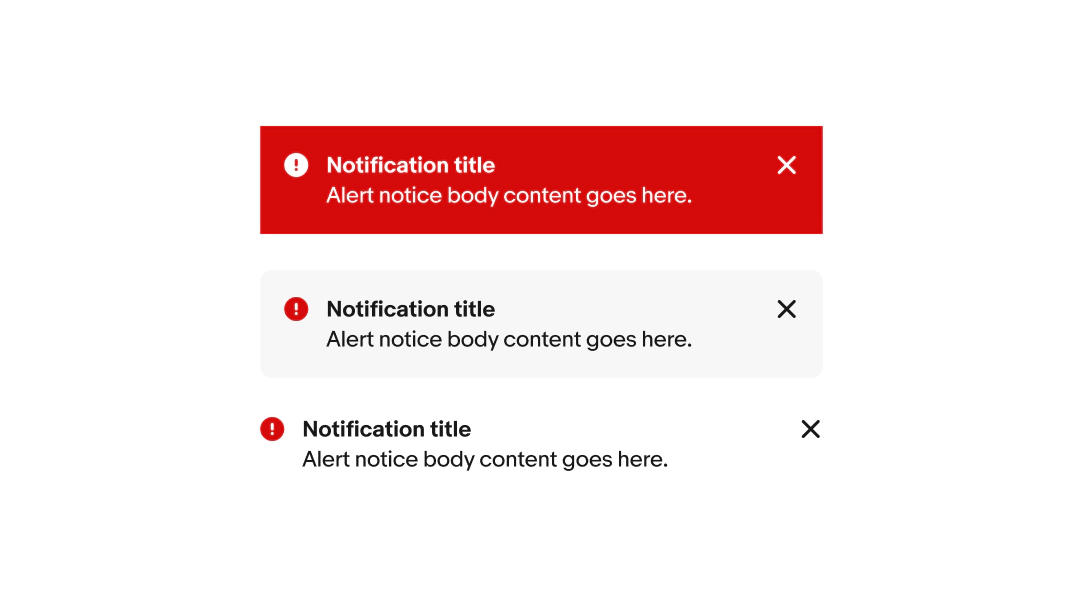
Attention
Use sparingly. Attention notices communicate urgent issues that are breaking or blocking.
Examples
- Account suspension
- Failed payment processing
- Listing violation
- Security breach
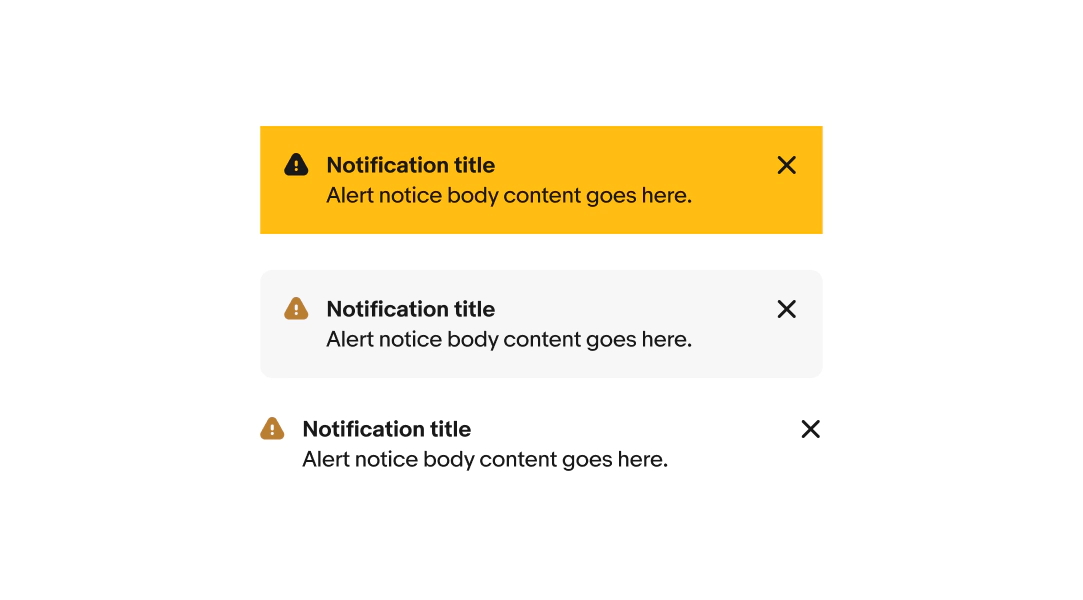
Warning
Warning notices communicate a potential problem or action that could lead to an undesired outcome if the user continues.
Examples
- Impacted results (e.g., limited availability, incomplete info, shipping delays)
- Deadlines, restrictions, or requirements
- User should review or confirm before proceeding
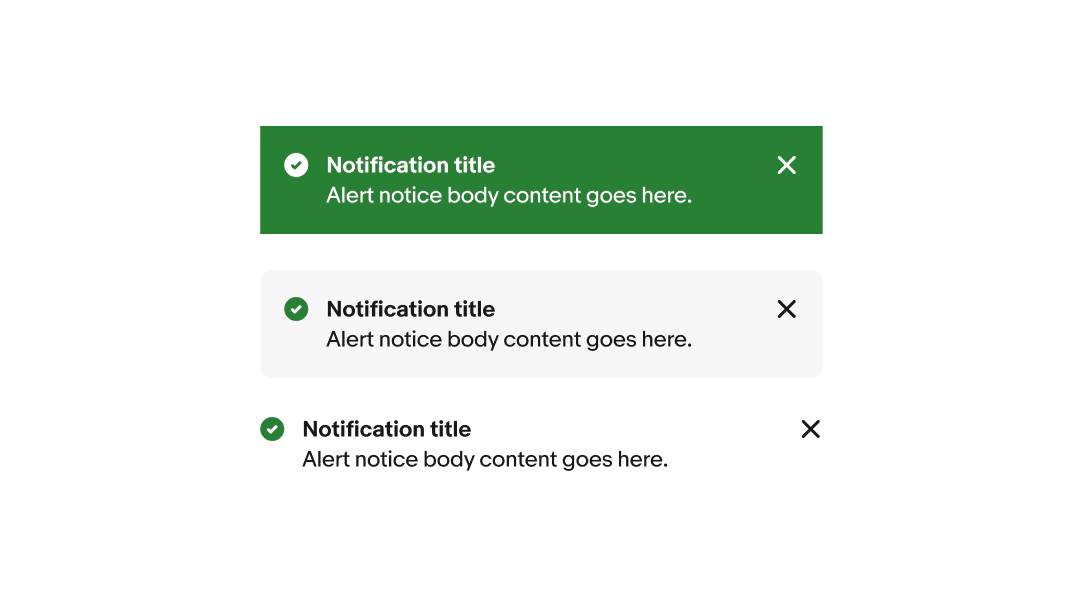
Confirmation
Confirmation notices communicate the successful completion of an action or process.
Example
- Account verified
- Listing posted
- Auction won
- Payment successful
- Profile completed
Information
Information notices communicate non-critical but helpful information.
Examples
- A seller policy update
- Valuable profile insights
- Listing quality suggestions
Neutral
Neutral notices communicate general information without urgency or a required action. It may or may not be related to the user’s current task.
Examples
- Community updates
- Promotion update
- Feedback reminder